On this page
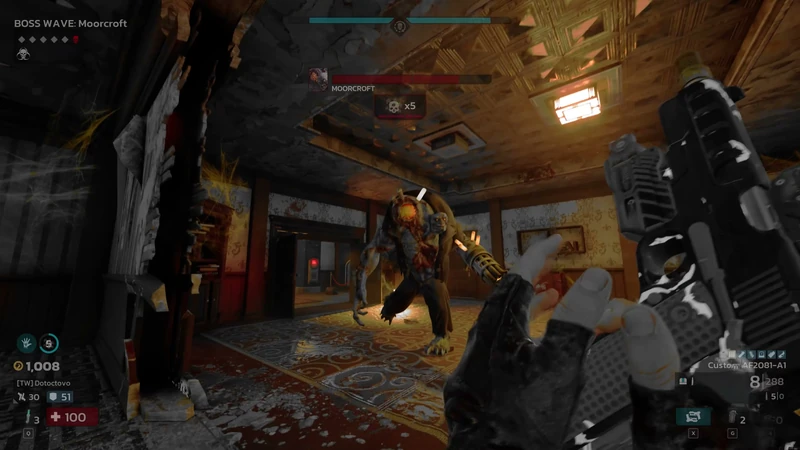
A monster makes a hotel room look too small. A box of wires makes the rest of a room disappear.
Those are two very different things to put in front of a player holding a gun. In Killing Floor 3, Moorcroft’s size turns ordinary furniture and doorways into a measure of the threat. In the No More Room in Hell 2 scene we examine, the repair itself takes over the view. Somewhere beyond the panel is the building where people were just fighting.
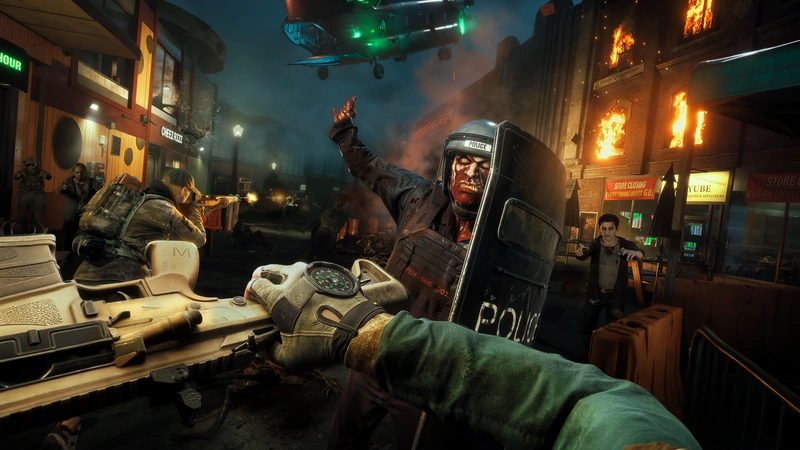
Both are good clips to send to a group looking for a zombie shooter. The useful question is what everyone wants to do between those exciting seconds.
Start with Killing Floor 3 if the next wave, the arsenal and a monster encounter are the attraction. Investigate No More Room in Hell 2 if the group wants an expedition with practical jobs to finish—or needs a seventh or eighth place. Neither choice settles difficulty, performance or the exact versions your friends can join with.
The scene comparison uses Tripwire’s October 2026 Ghastly Getaway showcase and Torn Banner’s October 2024 developer playtest. We have not played both games ourselves. Current No More Room in Hell 2 setup and death rules are checked separately against its 2026 release information.
Count the people before comparing the monsters
Killing Floor 3’s official Steam listing specifies co-op for up to six. No More Room in Hell 2’s Xbox listing gives an online co-op range of two to eight.
- Seven or eight friends: No More Room in Hell 2 is the candidate that can accommodate the whole group in the covered mode. Killing Floor 3’s six-player capacity cannot.
- Five or six: both remain in the conversation. Now the activity matters more than the maximum.
- Two to four: both fit the stated capacities, but these recordings do not establish how either difficulty feels with a smaller team.
Use the exact group checker with the consoles and PC stores everyone will actually use. A large maximum is only useful if the particular copies can join one another.
Killing Floor 3: make the next fight worth staying for
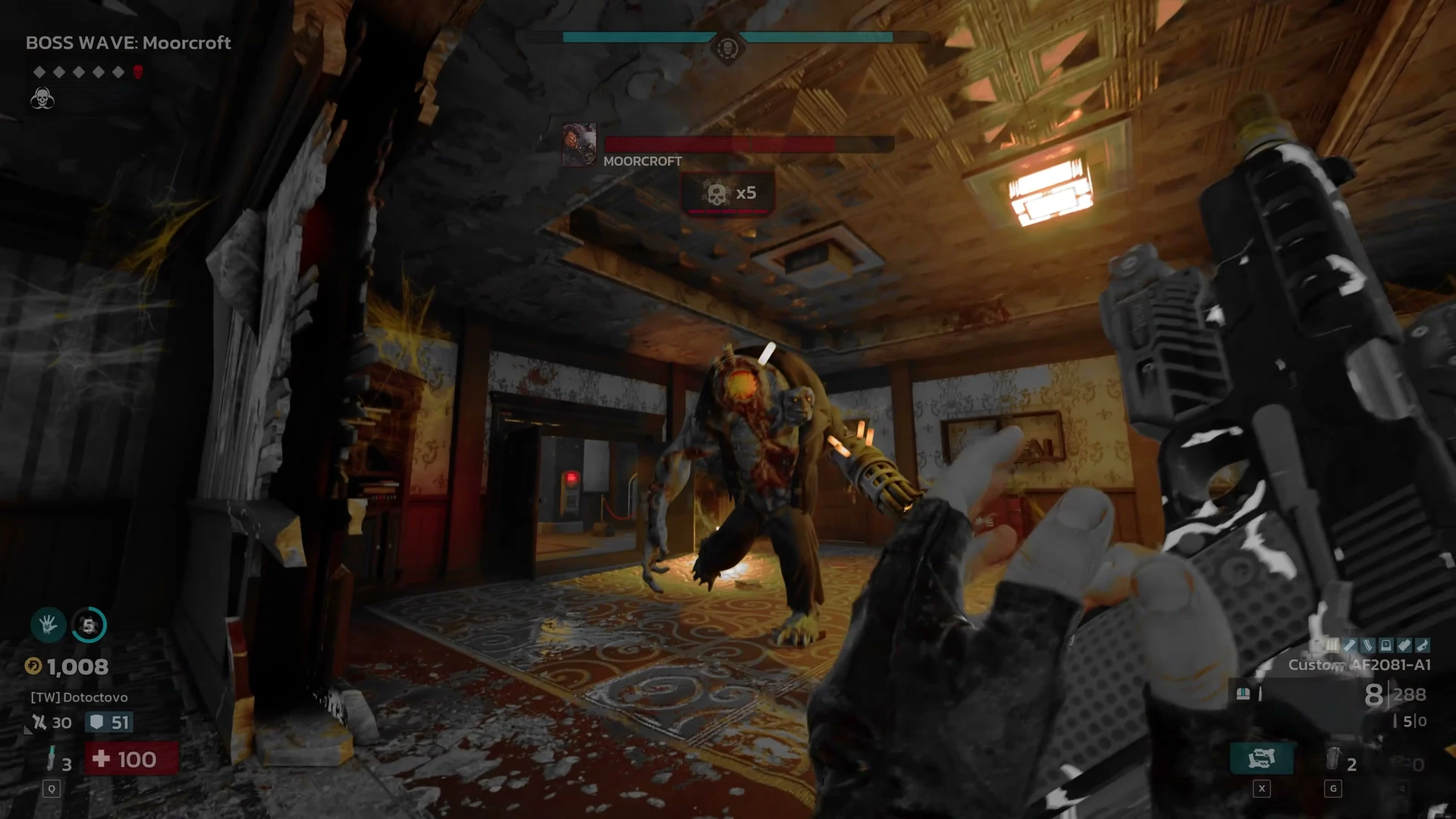
Look at Moorcroft at 08:25. It is not an isolated monster portrait. The boss shares the room with furniture, a ceiling and the openings the player might otherwise treat as routes. Its size means something because you can see what surrounds it.
The wider recording keeps finding ways to make this hotel a less comfortable place to stand. An atrium offers a broad view. A passage narrows it. A reload puts the hands and weapons across part of the room while the action continues beyond them. Our Killing Floor 3 field notes examine those changes in detail.
Tripwire describes a loop of fighting waves, earning currency and improving an arsenal. That gives the group a straightforward reason to stay interested after the impressive boss clip: another round is an opportunity to take the equipment back into a crowded fight.
Show friends a sustained passage as well as the monster. The effects and enemies make this footage busy, and the showcase uses Hell on Earth difficulty. Somebody who loves the appearance of the hotel may still dislike how much happens in the same patch of screen. The recording is an intense example, not a first-session benchmark.
No More Room in Hell 2: give the fight a job to interrupt
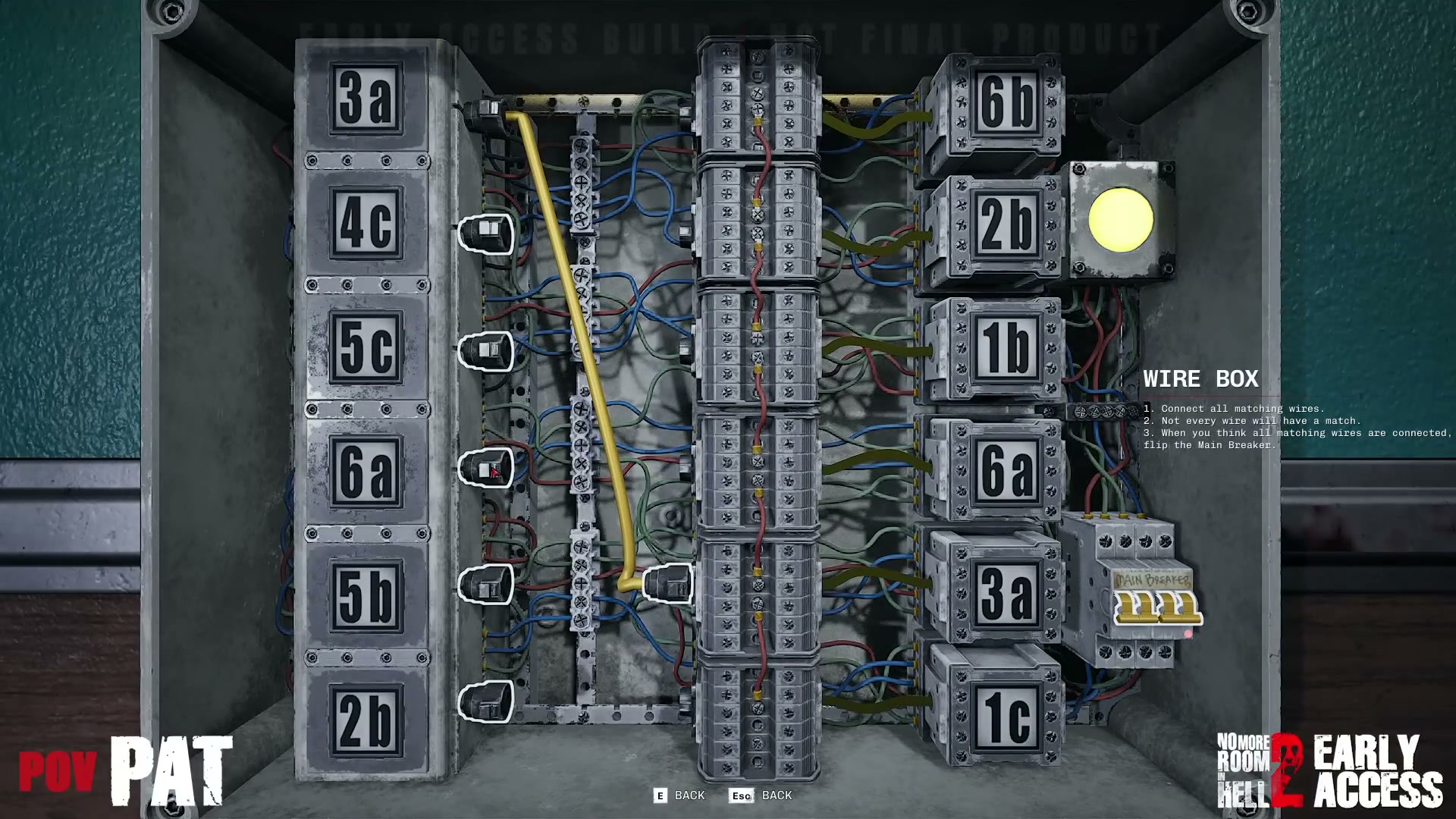
At 04:28 in Torn Banner’s developer playtest, labels and connections fill the screen. The player is working at an electrical panel. A few seconds later, the weapon and flashlight return, the task is complete and the next instruction concerns the antenna.
What makes that sequence interesting is the temporary change in attention. The player has to care about small parts inside a box. The surrounding room is no longer the main thing on screen, even though the earlier fighting has given it a reason to feel unsafe.
This is the clip to show someone who wants a purpose for entering a building beyond clearing the enemies. A small job can give the place a memory: the room with the panel, the equipment that had to work, the next task that pulled the group onward.
There is a limit to what this edit proves. It does not establish that another player deliberately guarded the repair throughout. Nor does a 2024 puzzle demonstrate every current mission. Our No More Room in Hell 2 analysis separates the observed scene from the later release changes.
Agree what a bad run is allowed to cost
The word “permadeath” can make the decision sound simpler than it is. Torn Banner’s August 2026 explanation expands respawn opportunities on Beginner and Normal while retaining more risk on Hard and Nightmare. It also explains situations where permanent loss still applies on the lower difficulties.
The September Resupply notes then add a final Normal-difficulty respawn window at the start of extraction. The same update introduces a Pottsville scenario where responders begin together on rooftops. Old footage cannot settle today’s starting arrangement or death rules for every mode.
Before choosing, ask whether the group wants the consequences attached to its selected difficulty. That is a more useful conversation than assuming every death means the same thing. These sources describe rules; they do not measure current matchmaking reliability or how forgiving the experience will feel to your friends.
Two scenes to send before anyone buys
Send the hotel passage and the repair panel, then ask one concrete question: which interruption would you rather be dealing with together? A large threat blocking the next stretch of the fight, or a task that needs attention while the location still feels dangerous?
The choice is not absolute. Killing Floor 3’s description includes environmental tools and traps; No More Room in Hell 2 also has plenty of combat. The scenes simply give each invitation a clearer shape than two trailers full of gunfire would.
Finally, check the two games side by side. Open the chosen game’s buying notes for the exact base-game listing, console online requirements and version details. A cosmetic pack or season pass should not be mistaken for the playable copy your friend needs.
If both still appeal, save the pair for the group chat. The useful outcome is a group that agrees on the evening, not a verdict that one game wins every category.
Official capacity and release references checked October 16, 2026. The comparison uses the credited recordings and linked developer information; it is not a hands-on performance, matchmaking or full-game review.
Check the pair side by side.
Put Killing Floor 3 and No More Room in Hell 2 next to each other: players, platforms, compatibility and the kind of evening each offers.
Compare these two gamesThese are editorial starting points drawn from our linked scene analyses and official game information. We have not assigned review scores or claimed hands-on testing. The individual game pages identify recording dates, creators, source types, rights notes, check dates and limits. Our editorial method.