On this page
A large, green glow fills the end of the passage. The player is looking straight down it, weapon ready, but the interesting question is where they could go next. The corridor suddenly looks much smaller than it did a moment ago.
That is the detail that makes Tripwire’s Ghastly Getaway footage worth a closer look. Killing Floor 3 has plenty of things to shoot. Here, the hotel itself keeps changing how threatening those things look: a balcony gives you a view, a doorway narrows it, and a boss turns familiar rooms into uncomfortable places to stand.
For your group: put this on the list if your friends like crowded gunfights, monster spectacle and surviving another wave together. The game supports up to six players. The recording examined here is an official, edited first look on Hell on Earth difficulty, so its intensity is not a beginner benchmark.
The hotel is part of the attraction
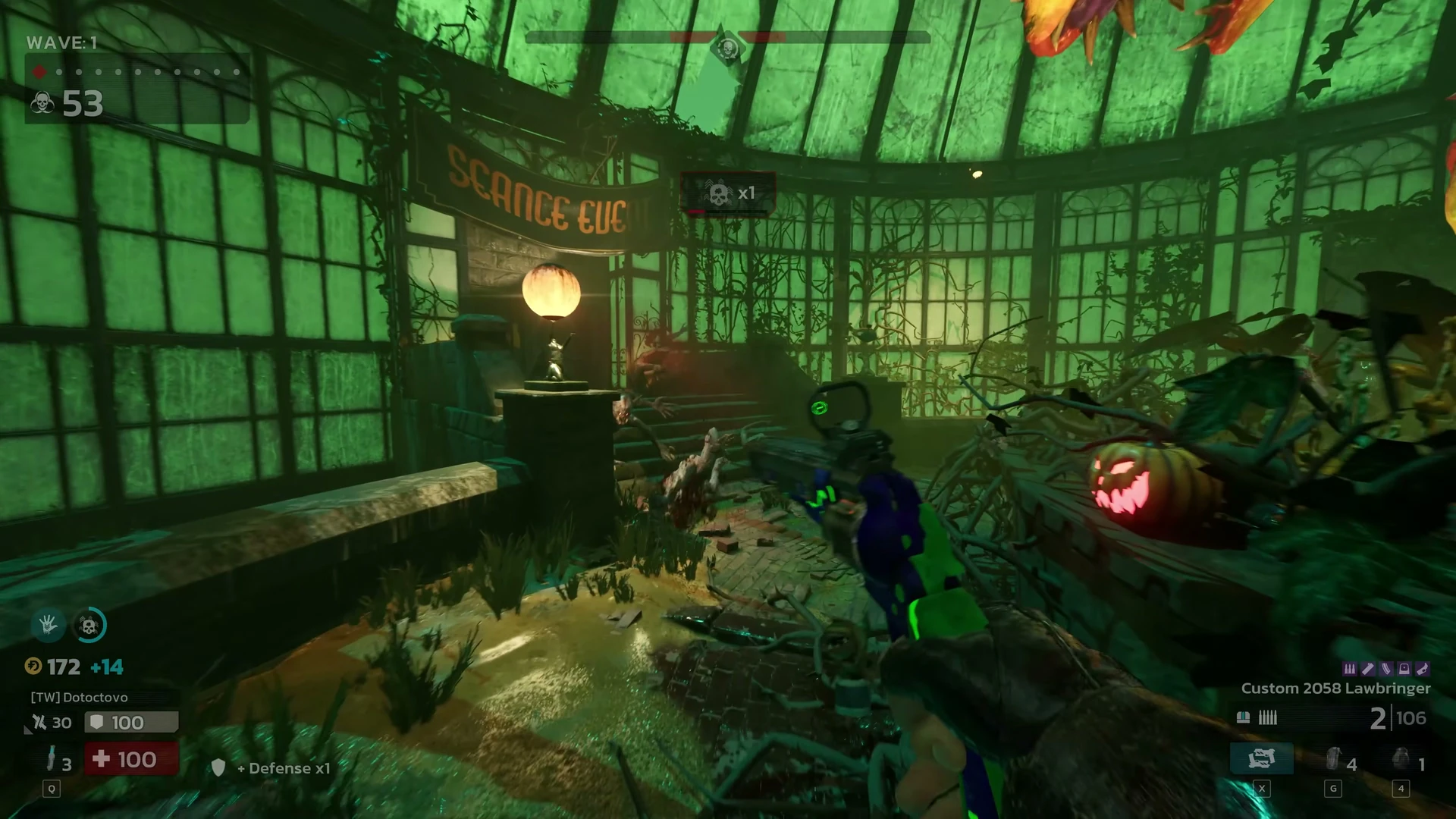
At 00:24 in the official recording, green glass and a broad interior give the scene an extravagant, theatrical look. You can look across the space and pick out its different levels. It is a setting you might want to explore even without the enemies.
The corridor fights make a sharp change. In a hall, the next doorway concentrates your attention into one opening. A large building can still offer a very small part of the picture to shoot through. Enemies, weapon movement and light compete for that patch of screen.
The appeal is easy to understand without knowing a build or a damage number. You see a route, then you see why passing through it might be difficult. That makes these moments good ones to send to friends who want to know what the game actually looks like in motion.
A reload makes the distance personal
Around 03:48, the pistols and the player’s hands occupy much of the foreground. The room has not disappeared, but the weapon animation is now sharing your attention with whatever is beyond it.
The hands are doing something necessary while partly covering the information you want. That overlap makes the reload interesting to watch. The next threat could be in the portion of the room still visible past the animation, so your attention keeps travelling between the weapons and the gap beyond them.
It is a small example of why weapon presentation matters here. A satisfying reload can also make the room feel less comfortably under control.
One boss changes the scale
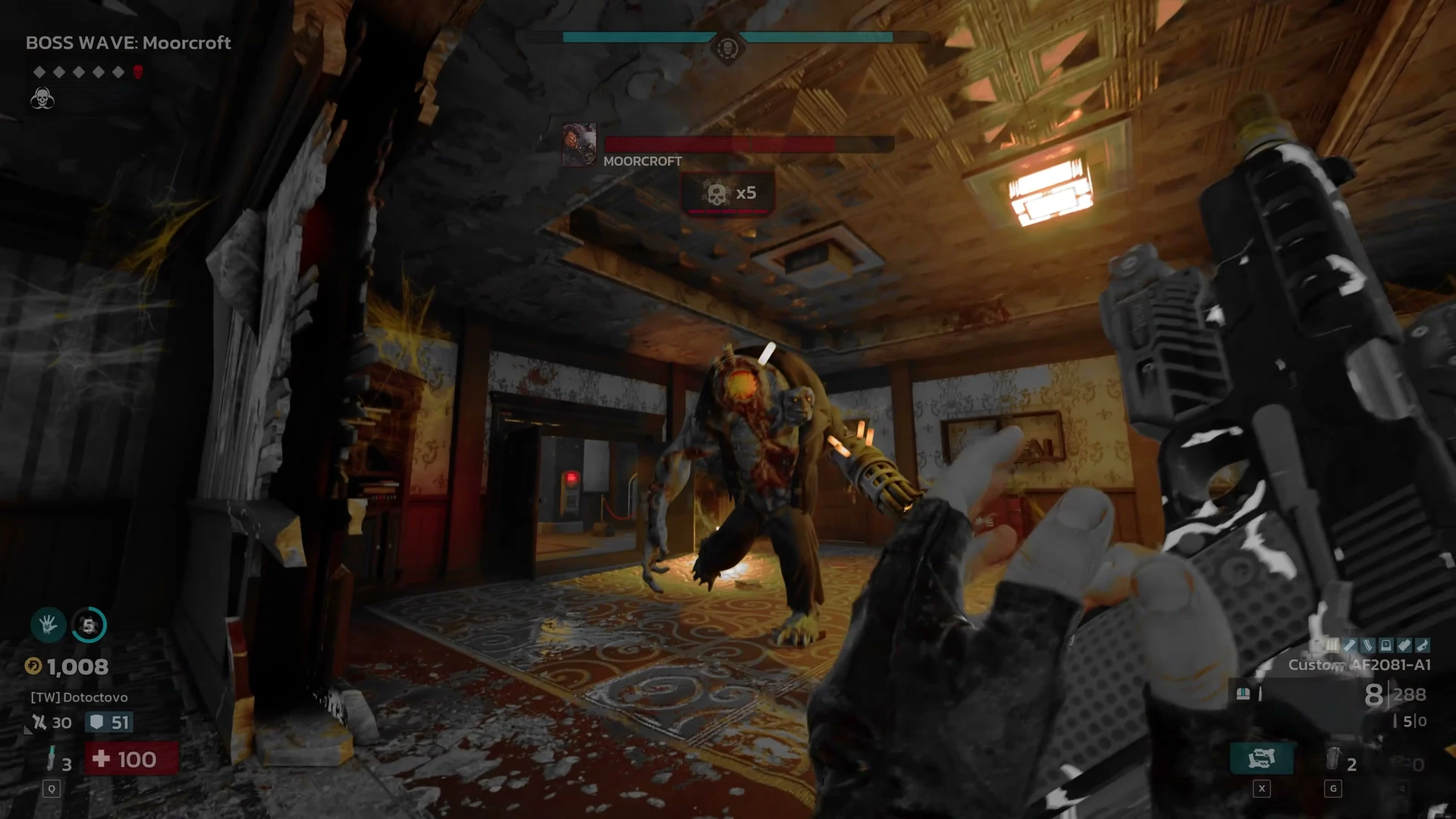
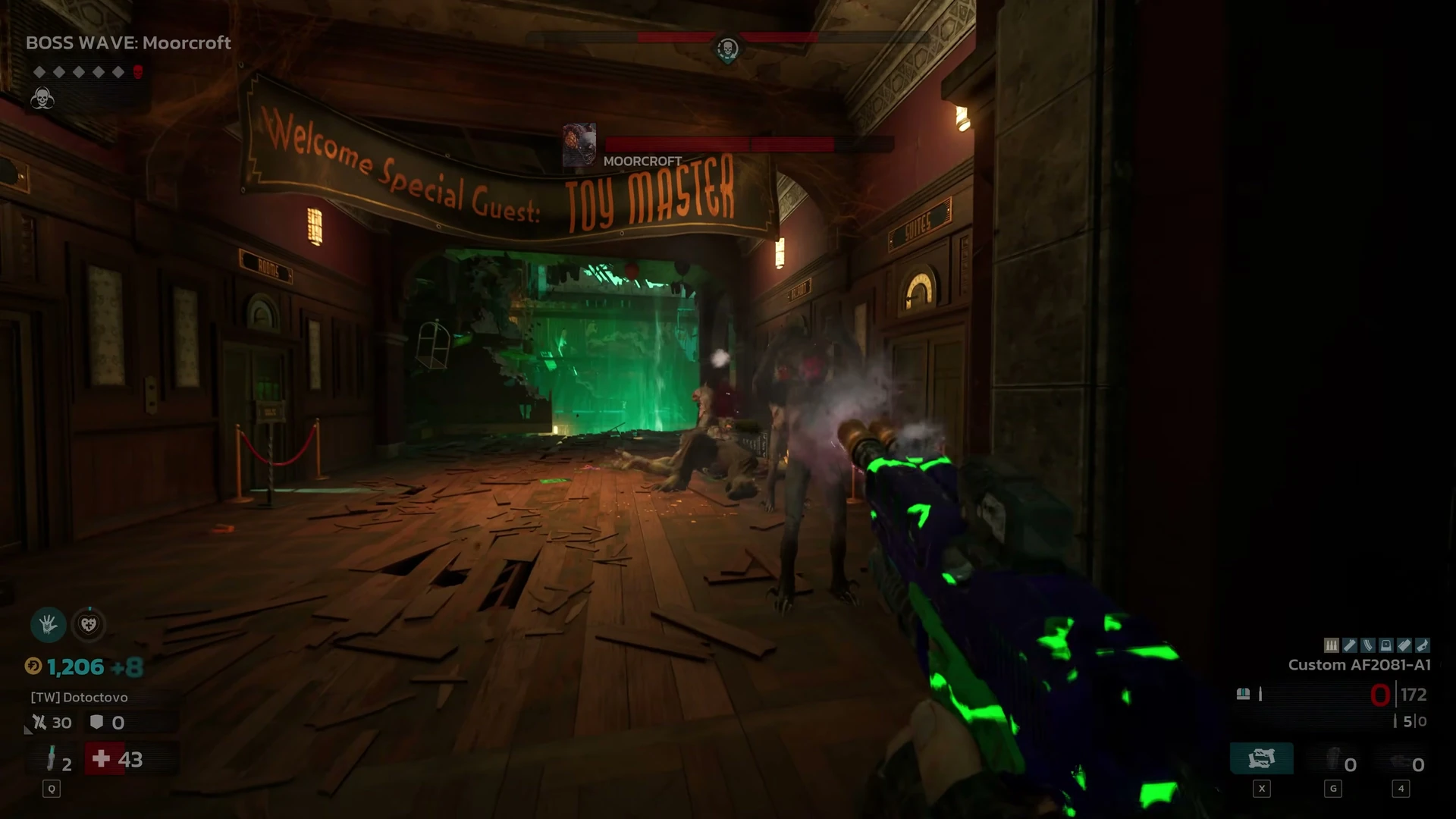
The late encounter introduces Moorcroft. In the 08:25 view, the boss occupies a substantial part of the room ahead. The ceiling, furniture and doorways make its size easier to appreciate than an isolated character close-up would.
The official video cuts between viewpoints. Keep that in mind: this is not one uninterrupted escape told from a single player’s perspective. What carries across the edits is the contrast between the hotel’s ordinary openings and the threat moving through them.
At 08:51, green light dominates the far end of a passage. Look at the available floor and the doorframe before looking back at the weapon. That is where the scene’s unease lives. Space that seemed useful a moment earlier now has something alarming in it.
The hallway has more than one problem.
Select a detail to highlight it in the frame.
The whole picture
The bright opening pulls the eye towards the end of the hallway. A nearer figure and an empty ammunition counter compete with it. The hotel gives this busy frame a clear direction, then fills the space between the player and that destination.
A way forward is easy to see.
Green light picks out the end of the corridor against its brown walls and floor. It is a strong visual destination. The broken boards and figures in front of it keep that apparent route from looking comfortable.
Something is already much closer.
A Zed stands just beyond the pistol on the right. Its body overlaps the view towards the opening. The attractive landmark at the far end and the immediate encounter occupy the same narrow slice of space.
The small red zero changes the picture.
The ammunition display reads zero. That detail sits at the edge of a scene full of brighter distractions, but it matters to how the moment reads: there is a close figure, a weapon in view and no round shown in the current magazine.
Another wave is a different invitation from another chapter
The official game description connects fighting waves with earning currency and improving an arsenal. That gives a group a recurring reason to care about the next fight: what will the loadout do when the pressure returns?
The Left 4 Dead 2 chapter we cover has a different visible destination. Its interruptions accumulate on the way to a safe-room door. One invitation centres on the next round of fighting; the other on getting a group through a stretch of the journey.
For friends who like talking about weapons and then taking them into another crowded encounter, Killing Floor 3 has an obvious point of interest. For friends mainly looking for the feeling of travelling somewhere together, send a longer mission example as well. The boss is an excellent first impression, but it cannot explain the entire evening.
Before the group buys a copy
The official Steam listing describes solo play, six-player co-op and a wave-based loop of fighting Zeds, earning currency and improving an arsenal. That makes it a practical candidate when your group has five or six people and wants a shooter. Capacity alone does not tell you how a particular difficulty will feel with fewer players.
There is a clear tradeoff in the footage: intense effects and crowded interiors can make it hard to separate every threat at a glance. Watch a sustained section, not just a dramatic still, before deciding whether that busyness appeals to everyone. This analysis does not test performance, matchmaking or long-term progression.
For a different kind of close-range pressure, read our Darktide shield analysis, or compare Killing Floor 3 with Darktide. If your friends want a journey towards an exit, our Left 4 Dead 2 field notes offer another starting point. The hotel’s particular invitation is simpler: stay for another wave, and find out how much room you have left.
For a larger squad choosing between waves and an objective-driven expedition, read Killing Floor 3 versus No More Room in Hell 2. Its eight-player option also changes the decision if a seventh friend joins the call.
Put it on your group’s radar if…
Your friends want crowded gunfights, large monsters and room for up to six in the squad.
Keep in mind: The official Ghastly Getaway first look uses Hell on Earth difficulty and switches viewpoints. It is not a beginner or performance test.Can your group play together?
Up to 6 people in the mode covered here. Standard online co-op; unmodified game.
Online versions, exceptions and official sources
Each row lists versions documented as compatible. For a mix that spans rows, use the group checker below; an unlisted combination may need another source check.
- Together onlinePC · Steam · PC · Epic Games · PlayStation 5 · Xbox Series X|S
Epic storefront login requirement should not be generalized to every edition. No paid cosmetic pack is a prerequisite for this base co-op match.
Versions absent from this review need a separate check. They are not automatically unavailable. These notes do not cover mods, cloud-streaming services or every game mode.
Six-player survival comes before the edition extras.
Start with the base game
Killing Floor 3 offers solo play and co-op for up to six. The basic game listing is the starting point for joining the fight; choose additional edition contents because you want them.
Read what the larger edition adds
Deluxe and Elite Nightfall editions list skins, Nightfall Supply Pass access and Creds. Their included passes and currency amounts differ. Read those contents instead of assuming a higher price means a different co-op campaign.
Make the hardware decision separately
The Steam version lists Easy Anti-Cheat and specific PC requirements. Our footage analysis is not a performance test of your computer, Steam Deck or another operating system. Check support for the device you plan to use.
Buying notes checked October 15, 2026. Confirm your edition, activation country and online requirements at the store.
Sources, footage & what this article covers
Recording: “Killing Floor 3 - Halloween Horrors: Ghastly Getaway | Gameplay First-Look” by Tripwire Interactive. Date / context: October 7, 2026. Original recording ↗
This article examines the publisher’s official showcase material. Images and linked footage support the analysis; they are not our own playtest captures and are not labelled Creative Commons. Image captions identify separate promotional assets where used. Rights remain with the publisher and respective game owners.
Game information checked on . Official game information ↗. Older footage may differ from the current game. Mood labels and group-fit suggestions are editorial interpretations.
Read how we cover games and how store links work.