On this page
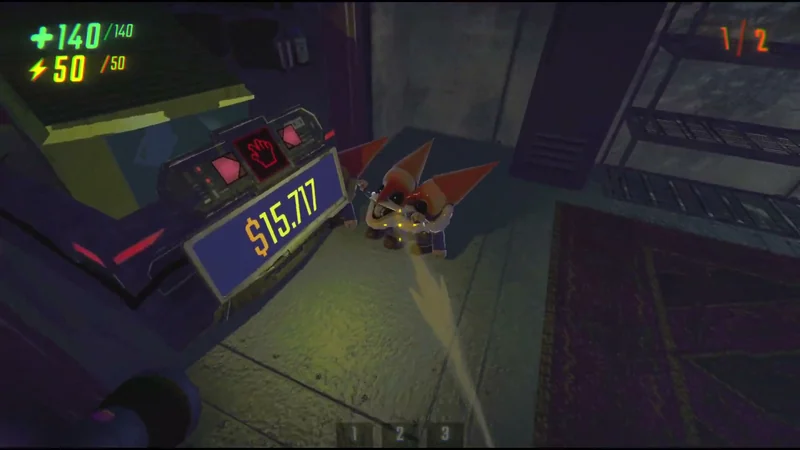
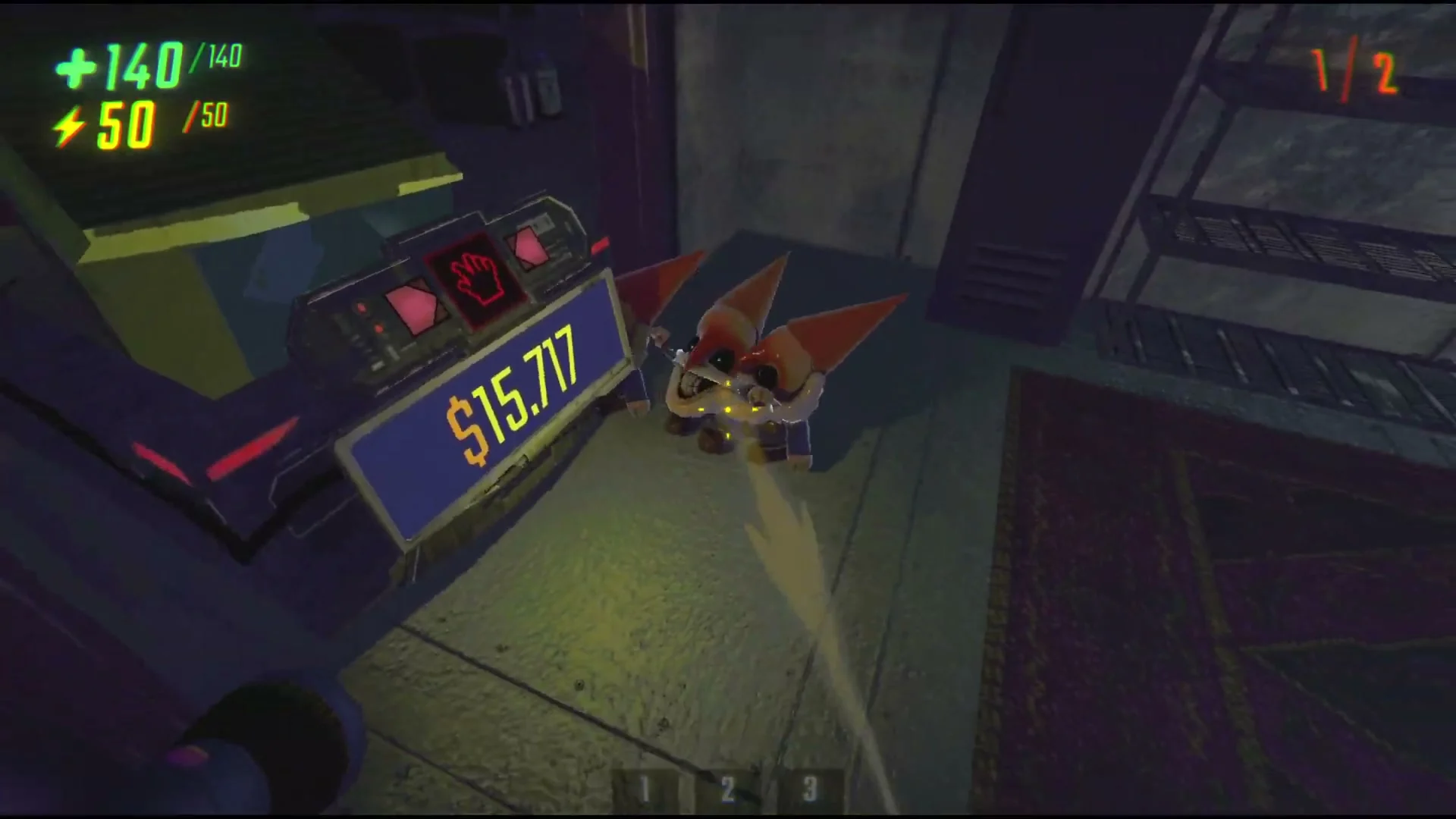
The cart is worth $15,717. A small creature reaches it, and the displayed value starts dropping. No one needs to know R.E.P.O.’s progression system to understand why that is a bad moment for the delivery.
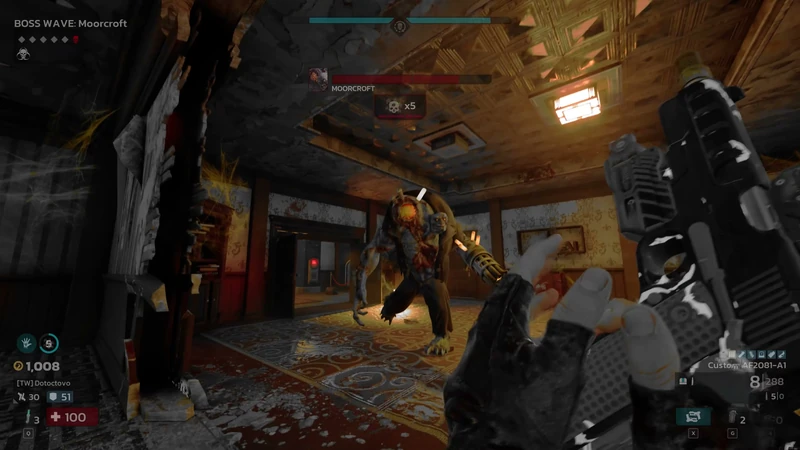
Now picture a different invitation: a large boss filling a hotel room in Killing Floor 3. The furniture makes its scale obvious, and the passage behind the weapon looks uncomfortably narrow.
Or imagine a third invitation: a chemistry bench, a glowing pet and a research facility you are trying to make habitable in Abiotic Factor.
All three games have room for six, but they offer different reasons to gather. Start with R.E.P.O. for a messy shared job, Killing Floor 3 for wave-based fighting, or Abiotic Factor for survival and crafting together. This guide focuses on three different kinds of six-player evening. It is not an exhaustive list of the games that can fit six.
R.E.P.O.: agree that the delivery can go wrong
The object is already a problem before a monster arrives. In the R.E.P.O. recording we examine, a painting occupies much of the view while the player manoeuvres through the building. A loaded cart then turns a doorway into something to negotiate with the whole haul.
The official Steam listing specifies online co-op for up to six players, physics-based valuables and proximity voice chat. Our coverage concerns that PC version, listed as Early Access when checked.
For a group of friends, the interesting question is how you feel about the loss attached to the comedy. In the cart encounter, the displayed value falls by $2,068. Getting the character through the room is not the whole job; the cargo matters too.
We would show this to six people who like an awkward task giving the conversation its subject. We would pause if half the group wants to protect every item and the other half only wants to see what happens when things collide. Having room for everyone will not settle that disagreement.
Before choosing: watch the handling between encounters. It is the activity the monsters interrupt, and a better indication of the evening than a compilation of screams.
Killing Floor 3: agree on the fight you want
The official Ghastly Getaway showcase gives us a broad atrium, cramped passages and a looming boss. The building is important: recognisable doors and furniture make the encounter’s scale easy to read.
Tripwire’s game listing describes up to six-player co-op, waves of Zeds and earning currency to improve an arsenal. That makes it the first of these three to investigate when the group means “we want to shoot things together.”
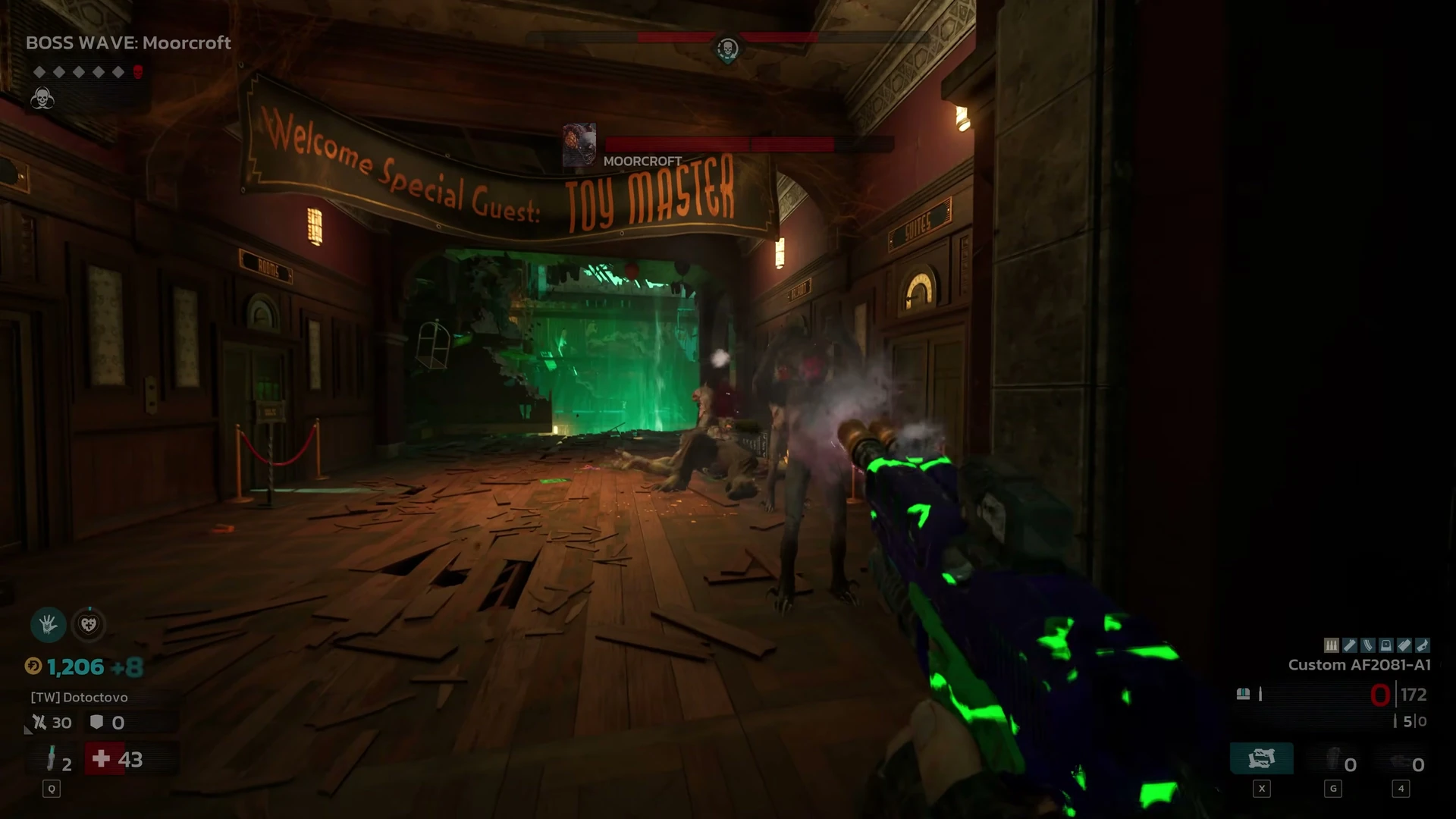
The footage we examine is edited and uses Hell on Earth difficulty. Its intensity should not set everyone’s expectations for a first session. Look at a sustained fight and discuss whether the visual density appeals, especially if one friend already struggles to follow busy combat footage.
Before choosing: agree that weapon-focused fighting is the attraction. A six-player capacity does not make this the right choice for someone who was hoping for investigation or exploration.
Abiotic Factor: agree that the preparation is part of the evening
A hand reaches towards a glowing creature, and a heart appears. Nearby in the official showcase, scientists have a chemistry apparatus full of coloured liquids to examine. The lab has become a place for projects as well as fights.
The developer describes survival crafting for one to six players, including scavenging and building a base. That is the useful distinction from the other two choices: your group needs to enjoy preparing and making things, rather than treating those activities as delays before the next encounter.
Our Abiotic Factor field note examines edited publisher showcases. They establish the playful workplace atmosphere, not the hours between discoveries or the workload of a full survival session.
Before choosing: ask whether everyone welcomes detours, experiments and shared supplies. Six people can fit in the same world while wanting very different amounts of time at the chemistry bench.
Check the six people, not just the number six
These are online capacities. They do not establish six-player couch support, identical experiences with fewer people, or compatibility between every edition.
For R.E.P.O., the evidence used here is the PC Steam release. Killing Floor 3 lists PC and console editions and cross-platform multiplayer; use its official information to confirm the versions your six friends intend to join with. For Abiotic Factor, Playstack confirms cross-play between the PC and console releases; the console versions are PS5 and Xbox Series X|S. Our cross-platform guide explains why store and console details matter.
If someone asks to bring a seventh person, none of these three capacities solves that plan. No More Room in Hell 2 is another direction: current official listings support up to eight in online co-op. Our comparison with Killing Floor 3 explains the difference between another wave and an objective-driven expedition. Check that larger group before everyone buys. Similarly, if only four arrive, do not infer difficulty or bot behaviour from the maximum player count; those need their own check.
Take a concrete choice to the group chat
Send the cart encounter, the hotel fight and the laboratory scene. Ask which activity sounds better: getting awkward valuables out intact, surviving another wave, or making a shared place and equipment. Compare R.E.P.O. with Killing Floor 3 for the first two, or Abiotic Factor with R.E.P.O. for the survival-versus-extraction choice.
You can also show only games with room for six. As our collection expands, that filter provides the wider list; this article focuses on three different activities supported by our scene analyses.
Capacity and official listings checked October 15, 2026. No price or whole-game score is attached to these recommendations. The linked field notes identify the recordings, rights information and limits of what we examined.
These are editorial starting points drawn from our linked scene analyses and official game information. We have not assigned review scores or claimed hands-on testing. The individual game pages identify recording dates, creators, source types, rights notes, check dates and limits. Our editorial method.