On this page
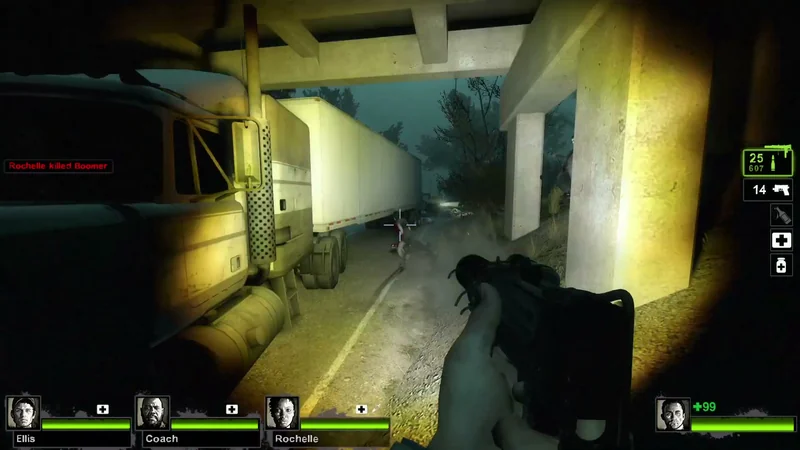
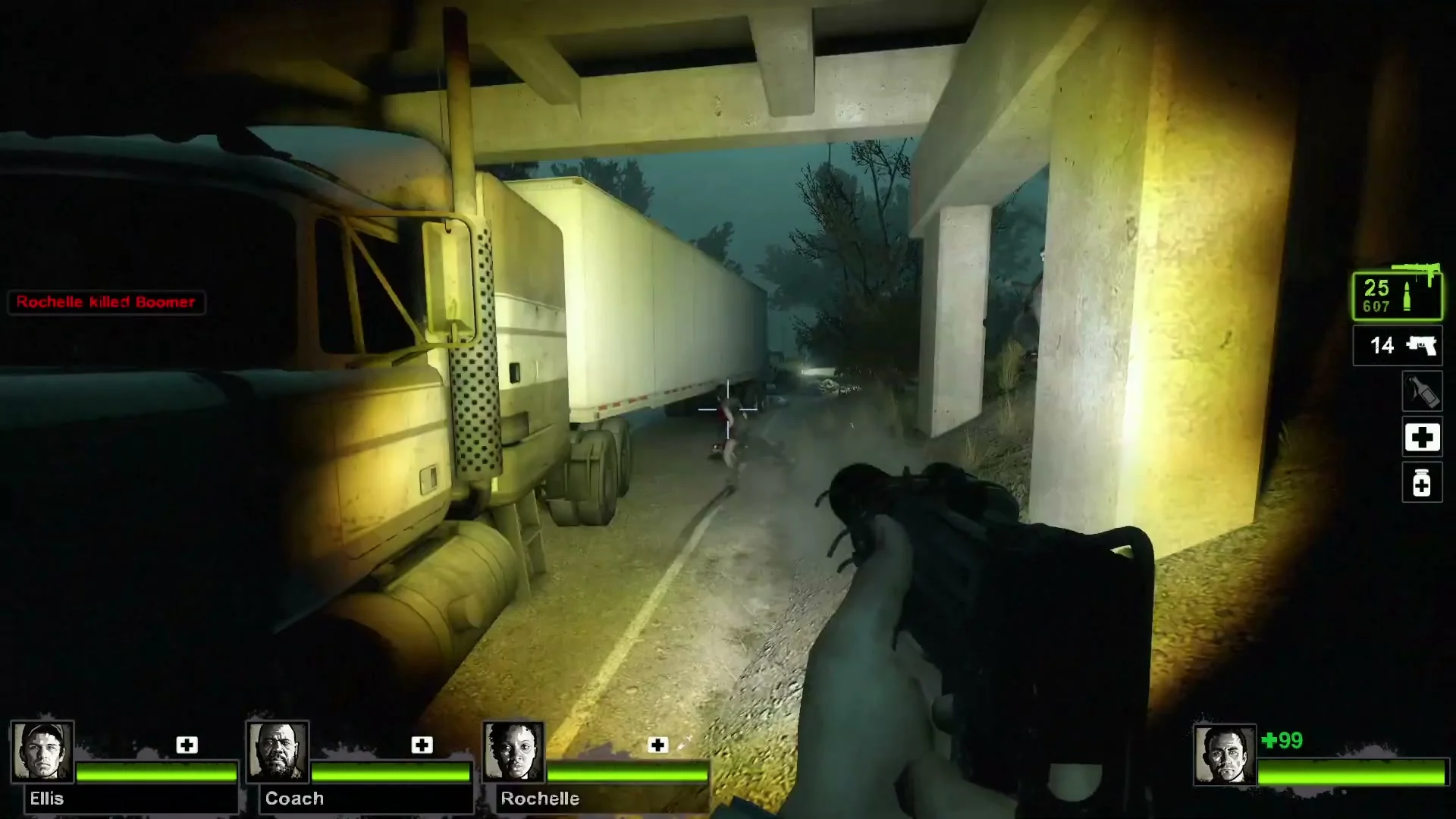
A Jockey pulls the survivor off a motel roof. Rochelle breaks the hold. By the safe-room door, the team has dealt with obscured vision, another grab and a healing pause that someone had to cover.
“More like that” can mean several things. The crowd? The rescue? The relief of reaching an exit together? Choosing the next game gets easier once you name the part you want to keep.
These five directions grow out of our credited scene analyses and official game descriptions. They are starting points for different groups, not a ranking based on playtime we have not recorded.
Toxic Commando: give the crowd something to attack
Start here if your friends want a loud common objective and a fight that might fall apart in its final minute.
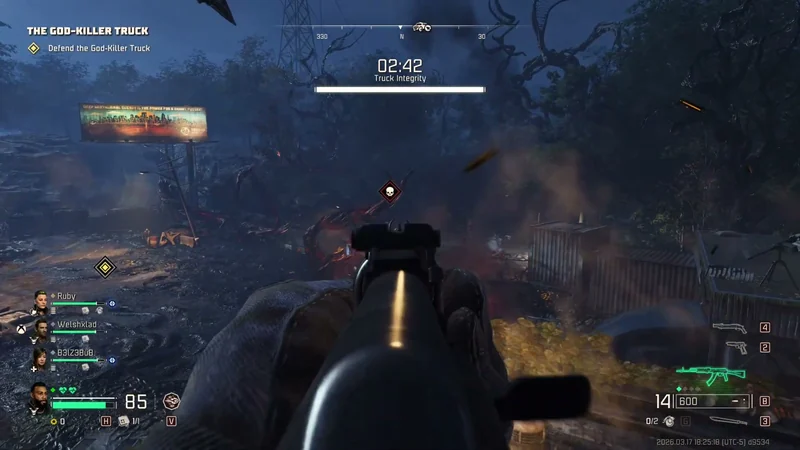
In our Toxic Commando example, an early drive gives the squad a vehicle to travel in. Later, a large mission truck becomes something they have to defend. The three-minute countdown makes the job obvious. The infected make it difficult.
The connection to Left 4 Dead 2 is the sudden change in responsibility. An incapacitation forces attention away from simply firing at the crowd. Getting people back into the action matters while the objective continues.
The vehicle work gives this sequence a different texture: fuel, a winch and obstacles on the journey precede the stationary defence. It is the first candidate here we would show a group asking for more open, noisy spectacle.
The tradeoff: flames, bodies and effects can make the picture busy. Watch the truck fight before deciding whether the intensity looks exciting or exhausting. Our analysis covers that mission sequence, not the campaign’s overall variety.
Compare Toxic Commando and Left 4 Dead 2.
Deep Rock Galactic: make the tools part of the appeal
Start here if the group wants a shared job with exploration and ways to change the route.
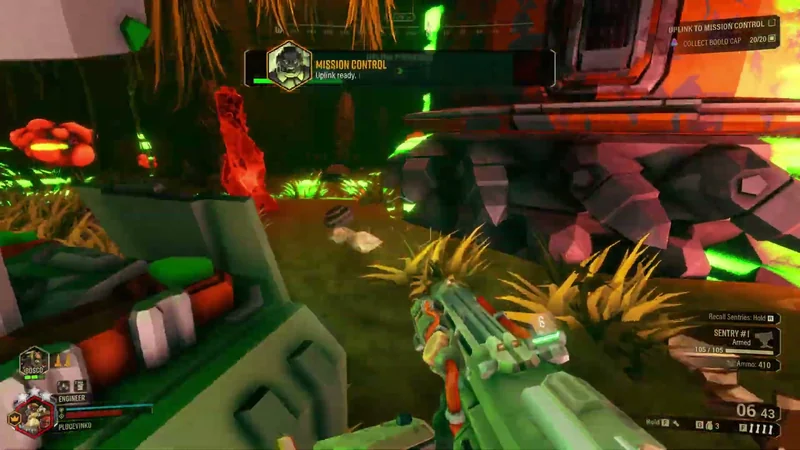
Our Engineer salvage example follows a solo run with Bosco. The platforms, repair work and difficult departure are visible; human teamwork is outside that recording’s scope.
Even with that limit, the sequence gives us a useful reason to look further. The Engineer makes places to stand, holds a small area while equipment runs, and builds a way to the drop pod. The eventual exit feels earned because reaching the pod was only part of the job.
For friends who enjoy being useful beyond their aim, that is a promising direction. The official game listing describes one-to-four-player co-op, distinct classes and destructible caves.
The tradeoff: there is a job to do between the firefights. A group that wants almost uninterrupted forward shooting should watch the setup and repairs as well as the swarm.
There is also a practical catch: the official cross-play page distinguishes Steam from the Xbox/Microsoft Store group. Agree on the version before everyone buys separately.
GTFO: make the next room a discussion
Start here when your group actively wants to concentrate.
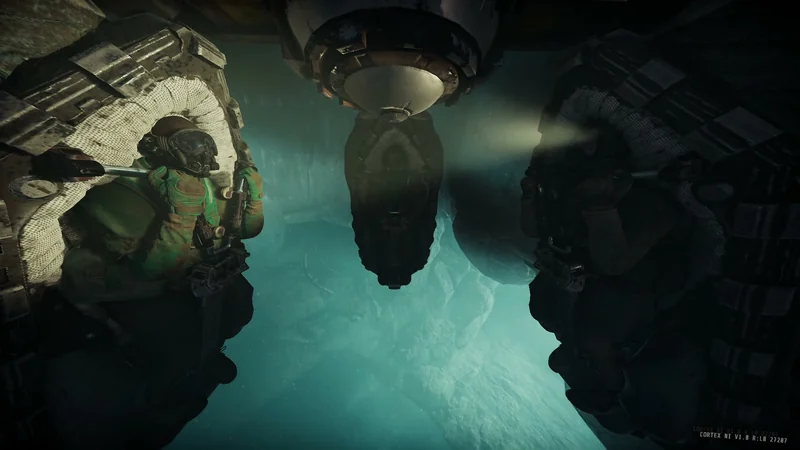
The GTFO expedition we analysed builds tension through partial views, doors and scans that require attention while the surrounding room remains threatening. It is a useful direction for friends who like the preparation before a fight as much as the fight itself.
Its official description centres on four-person teams, resource management and coordinated movement. That is a meaningful change of emphasis from choosing a game mainly for a quick flow of shooting and rescues.
The tradeoff: the deliberate pace needs buy-in. If half the group wants to talk through a room and the other half wants to rush onward, that disagreement may become the evening’s main event. We would shortlist it for a night when everyone wants that attention to be part of the fun.
Our field notes use an older Rundown 6 A1 recording, with the environmental spoiler tucked behind an optional reveal.
Killing Floor 3: stay for another wave
Start here if the group wants weapons, large monsters and a reason to survive the next round of fighting. Its six-player capacity and wave-based loop also make it the candidate in this selection to investigate when five or six friends need places in one co-op session.
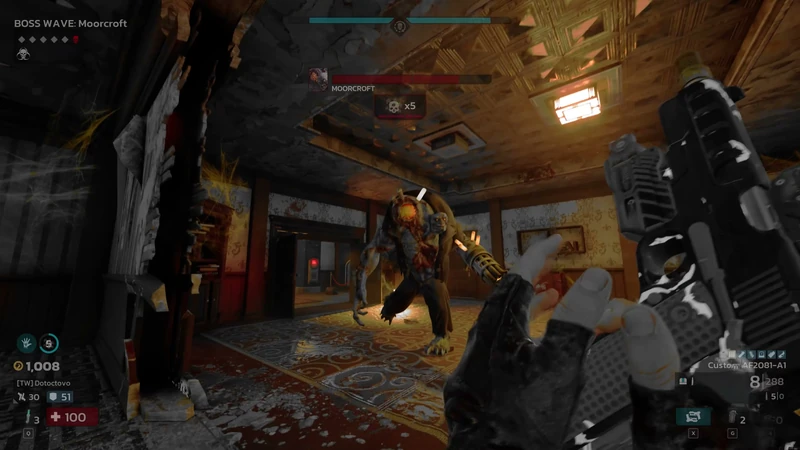
Our Ghastly Getaway analysis follows a hotel becoming less spacious with every crowded passage and looming boss. The ordinary doorways make the monster’s scale readable. You can understand the attraction before learning the arsenal.
The tradeoff: fighting another wave is a different rhythm from making progress toward a safe room. The official Hell on Earth footage is also an intense showcase. Let the group see a sustained fight before treating its spectacle as a promise about a first session.
Darktide: bring the fight within arm’s reach
Start here if the group likes moving through imposing places and wants melee woven into its shooting. Darktide’s four-person premise gives us a different answer to “another horde game”: the setting and the weight of the immediate encounter are major parts of the invitation.
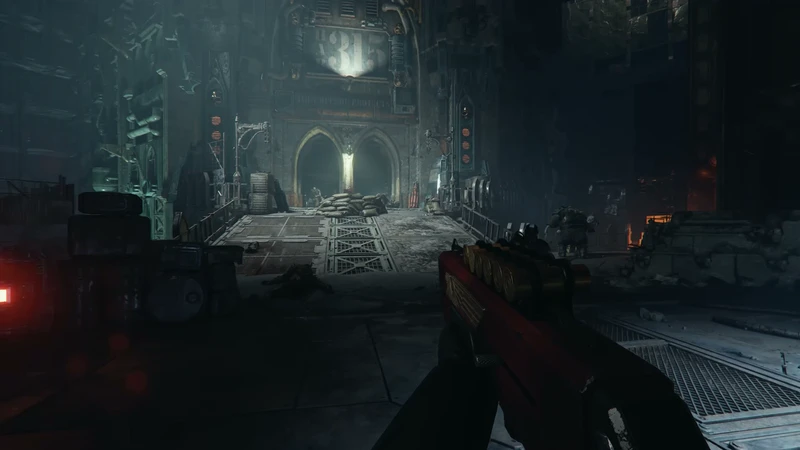
In our Arbites field notes, a shield fills the foreground while a much larger room remains visible around it. Moving through an arch or lowering the shield changes how much of that room the player can read. The appeal includes those changes of scale, not just the number of enemies.
The tradeoff: this footage shows a paid class. If the cyber-mastiff is the selling point, check the current edition contents. Our Killing Floor 3 vs Darktide comparison separates the two combat invitations and the purchase details.
Pick the part you want more of
If the favourite memory is saving someone in a failing fight, send the Toxic Commando recovery. If it is earning the way home, send the Engineer’s departure. If everyone wants more preparation, show GTFO’s scan. For waves and a larger party, investigate Killing Floor 3; for close combat inside an imposing city, investigate Darktide.
There is no need to buy five answers to one question. Compare the two that fit your group, check the exact versions and send one complete encounter from each. Keep the build-up in: a rescue, a repair and a reload say more about an evening than a montage of the biggest enemies.
These are editorial starting points drawn from our linked scene analyses and official game information. We have not assigned review scores or claimed hands-on testing. The individual game pages identify recording dates, creators, source types, rights notes, check dates and limits. Our editorial method.